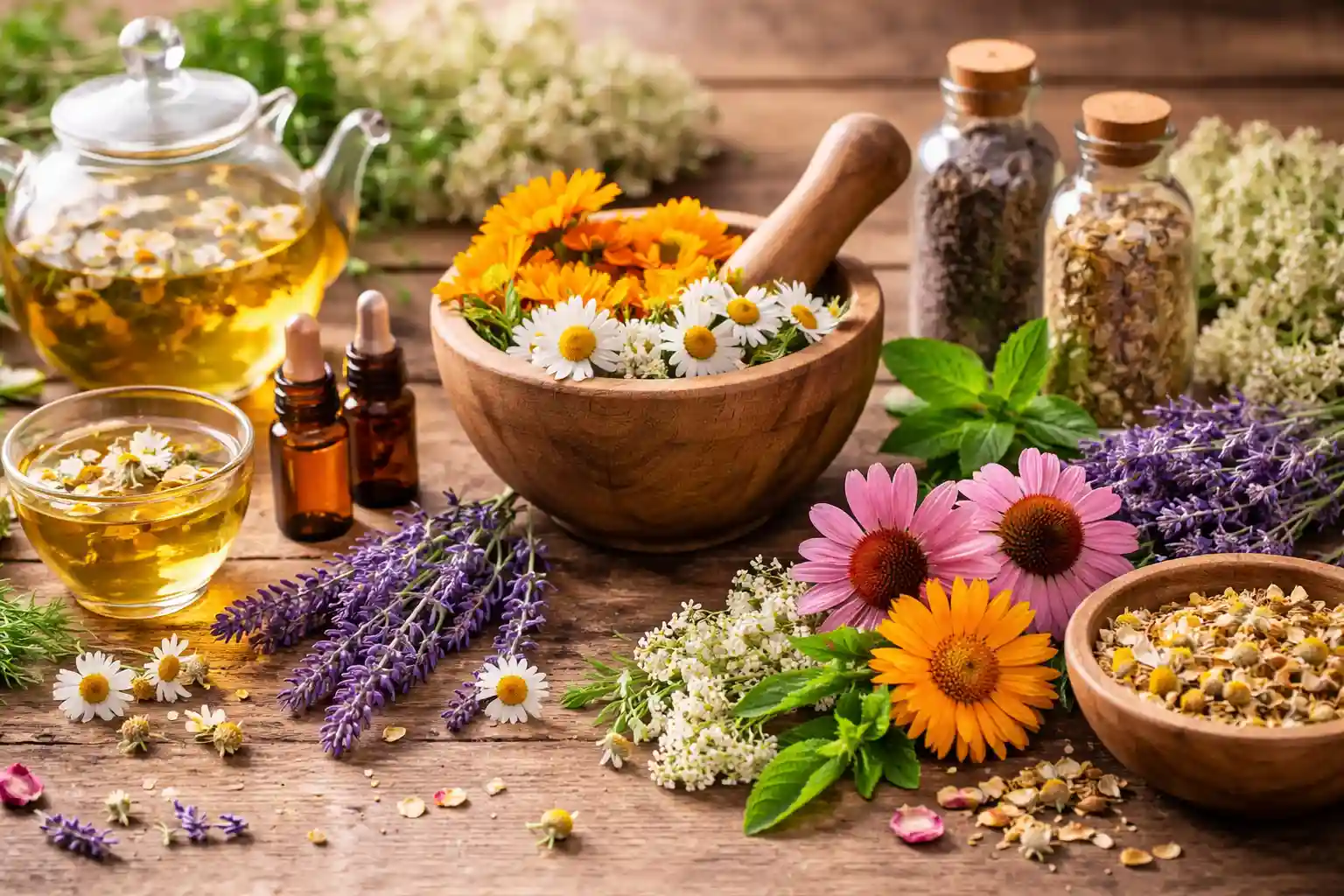
Flowers commonly used in herbal remedies include chamomile, calendula, lavender, elderflower, echinacea, hibiscus, and rose. These flowers are valued for gentle support such as relaxation, skin comfort, digestion, and immune balance, making them ideal for everyday herbal use.
For a long time, I assumed herbal remedies were mostly about roots, bark, and bitter leaves. Flowers felt decorative rather than practical. That belief changed once I noticed how often flowers appeared in gentle teas, calming routines, and simple skin care practices that actually helped me feel better.
Over time, I learned that flowers play a quiet but meaningful role in everyday support. They don’t overwhelm the body. Instead, they work subtly, which makes them easier to use consistently when symptoms are mild and familiar. That subtle approach explains why medicinal flowers have remained part of traditional care for centuries.
Why Do Flowers Matter in Herbal Remedies?
Flowers are often overlooked because they don’t feel powerful, yet that gentleness is exactly what makes them practical for daily routines. I turn to flowers when I want steady support instead of dramatic effects, and that approach fits naturally into many herbal remedies without adding complexity or rigid schedules.
I’ve also noticed that flowers work best when balance matters more than force. That’s why they show up so often in calming teas, skin comfort routines, and bedtime habits. Over time, they taught me that effective care doesn’t always need intensity to be meaningful.
What Are Medicinal Flowers?
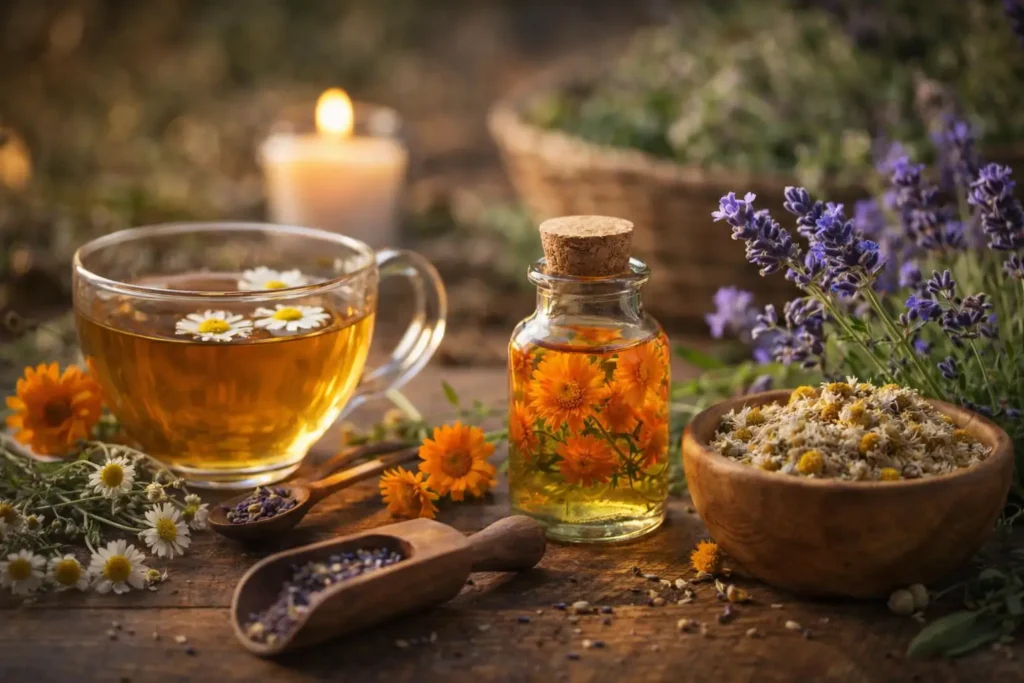
Historically, medicinal flowers were part of daily life, not ceremonial care.
How Medicinal Flowers Were Traditionally Used:
Families relied on them for comfort, recovery, and emotional steadiness rather than emergencies. That practical mindset still guides how I use them today.
Traditional use emphasized repetition and moderation. A cup of tea at night or a simple infused oil for skin discomfort wasn’t a special event. It was routine, and that routine mattered more than potency.
What Flower Represents Healing Across Cultures?
People often ask what flower represents healing, and the answer depends on culture. Roses are commonly linked to emotional comfort. Lavender reflects calm and rest. Chamomile is often associated with peace and recovery.
These meanings developed because people observed real effects over time. Flowers that symbolize healing often eased stress first, which supported physical recovery as well.
Common Flowers Used in Herbal Remedies
Many of the flowers listed below are also considered edible herb flowers to grow at home, especially for people who prefer fresh, chemical free options for teas and simple remedies.
1. Chamomile
Chamomile is commonly used in herbal remedies for relaxation and digestive comfort. It’s often prepared as a gentle tea and used in evening routines to support calm and sleep.
2. Calendula
Calendula flowers are valued for skin comfort and minor irritation support. They are commonly infused into oils or salves for external use.
3. Lavender
Lavender is widely used to support relaxation and emotional balance. It’s commonly used in teas, infused oils, or light aromatic routines.
4. Elderflower
Elderflower appears frequently in herbal remedies for seasonal discomfort. It’s commonly used in teas or syrups during congestion or early cold symptoms.
5. Hibiscus
Hibiscus flowers are used in herbal blends to support digestion and fluid balance. They are most often prepared as a tart, refreshing tea.
6. Echinacea
Echinacea flowers are used to support immune response when taken early. They are commonly used in short-term teas or tincture blends.
7. Rose
Rose petals are used in herbal remedies for emotional comfort and gentle skin support. They are commonly used in teas, infused oils, or cooling skin applications.
How Do Health Flowers Fit Into Everyday Wellness?
I think of health flowers as support tools rather than treatments. They work best when they blend into routines instead of interrupting them, which is why I include them in my daily Herbal Remedies practices rather than using them as one-off fixes. A warm drink before bed or a calming scent during downtime fits naturally into my day.
When something feels simple and familiar, I’m more likely to stay consistent. That’s one reason flowers remain part of my regular wellness rhythm. When something feels simple and familiar, I’m more likely to stay consistent. That’s one reason flowers remain part of my regular wellness rhythm, alongside other simple home remedies that work for everyday comfort.
Which Flowers That Symbolize Healing and Strength Are Used in Practice?
Flowers that symbolize healing and strength usually appear during recovery rather than crisis. They support resilience instead of force, which is why I see them as companions during rebuilding phases.
Calendula supports skin repair. Elderflower shows up during cold discomfort. Echinacea is often used when immunity feels challenged. These aren’t emergency tools. They’re recovery allies.
What Are Herbal Flowers
Herbal flowers refer specifically to the bloom, not the entire plant.
Why the Plant Part Matters in Herbal Remedies
Leaves, roots, seeds, and flowers behave differently in the body, and learning this distinction improved how effective my routines became.
Lavender flowers calm. Calendula petals soothe. Other parts of those same plants don’t serve the same role, which is why accuracy matters.
Flowers With Healing Properties for Skin Comfort
How These Flowers Support Skin Recovery
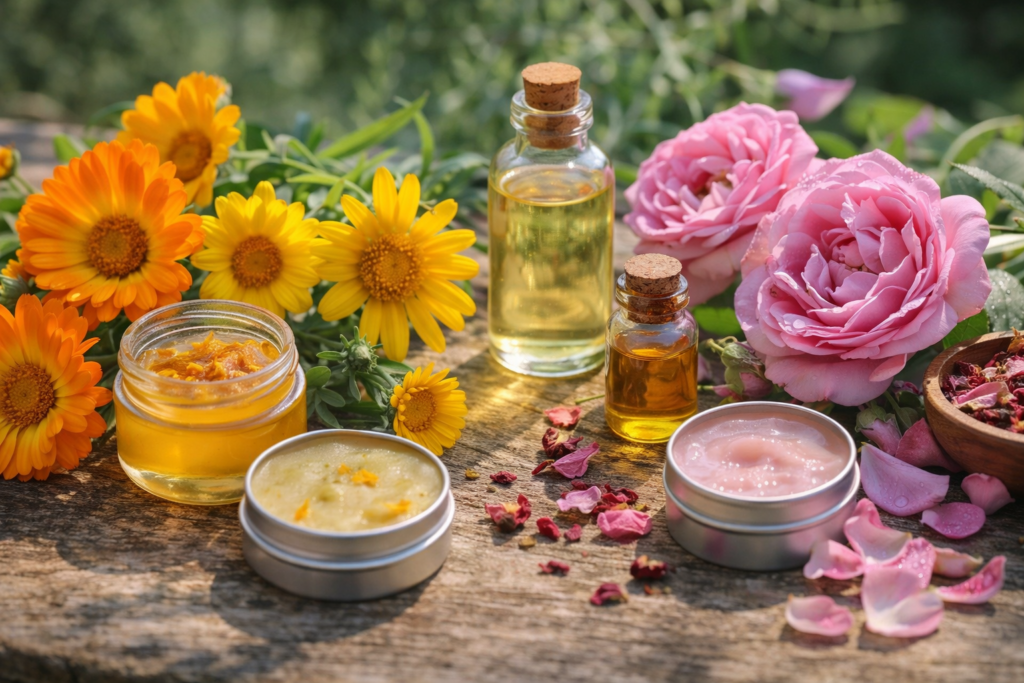
Some flowers with healing properties are especially useful for skin care and minor first aid. They support comfort without irritation when used properly.
Calendula helps with mild irritation. Arnica supports bruising when used correctly. Rose petals cool inflamed skin. I prefer infused oils and salves because they apply easily and store well.
Why Do Flowers That Represent Healing Appear Across Traditions?
Flowers that represent healing appear repeatedly across herbal traditions. That repetition builds trust for me. Chamomile, lavender, elderflower, and passionflower appear in different cultures for similar reasons.
I trust repetition over novelty. Reliability matters more than trends in wellness routines.
Why Do Flowers That Mean Healing Support Sleep and Stress?
Flowers that mean healing often support the nervous system directly. They help the body unwind naturally rather than forcing sleep or sedation. Many of these flowers are also used in natural sleep and stress support routines found in traditional remedies.
I’ve noticed that I fall asleep more easily and wake without heaviness. That balance matters more than quick fixes.
What Flowers for Healing Are Used in Immunity and Digestion?
Flowers for healing also appear in immune and digestive routines. They work best when used early and gently.
Echinacea supports immune response when taken early. Elderflower helps during congestion. Hibiscus and dandelion flowers support digestion and fluid balance when used lightly. In many traditional systems, including Asian weight loss herbs practices, flowers and light botanicals are often combined to support digestion and metabolic balance in a gradual way. Timing matters more than intensity.
What Is the Difference Between a Healing Flower and a Healing Plant?
A healing flower refers specifically to the bloom, while a healing plant may include roots, stems, or leaves. Understanding this difference improves safety and effectiveness.
Dandelion flowers offer antioxidant support, while the root supports digestion. Each part plays a different role, and treating them as interchangeable reduces results.
How to Use Flowers as Herbal Remedies Safely and Practically
I keep flower use simple and intentional. I avoid stacking too many remedies and pay attention to how my body responds. Flowers work best as support, not substitutes for medical care.
Most of my routines involve teas, infused oils, or gentle aromatic use. This keeps flower healing predictable and easy to stop if something doesn’t feel right.
| Method | How It’s Used | When It Helps |
| Tea | Steep dried flowers | Stress, digestion |
| Infused oil | Flowers soaked in oil | Skin comfort |
| Aromatic use | Light scent exposure | Relaxation |
| Blended support | Paired with roots | Immune balance |
How Are Plants Used for Medicine Combined With Flowers?
Plants used for medicine often pair well with flowers. Flowers calm the system, while roots and spices add warmth and movement. Together, they create balance. This approach reflects how many traditional natural healing methods use plants and flowers together for balance.
This balance keeps routines steady and sustainable rather than reactive.
Plants With Healing Properties That Pair Well With Flowers
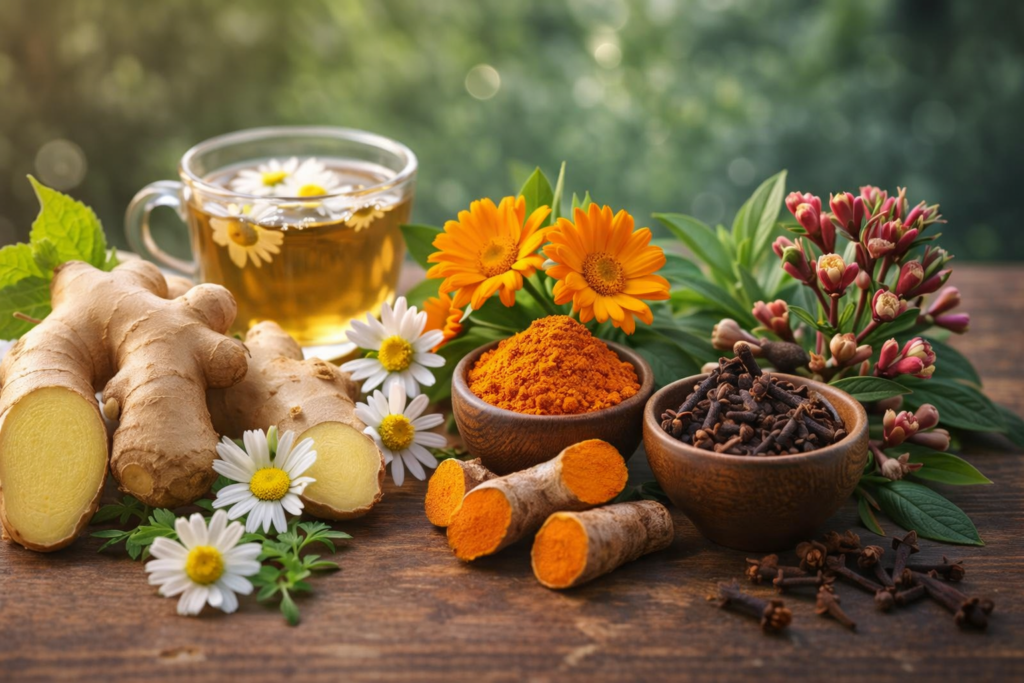
Many plants with healing properties complement flowers naturally. Ginger with chamomile supports digestion. Turmeric with calendula supports inflammation balance. Cloves flower appears in warming blends that support circulation.
Pairing works because each element supports a different function instead of competing.
When Should I Use a Flower for Healing at Home?
I reach for a flower for healing only when symptoms are mild and familiar. Minor discomfort, light stress, or early cold symptoms respond best to gentle support.
Severe pain, fever, or worsening symptoms require professional care. Clear boundaries reduce uncertainty.
What Does the Idea of a Flower of Healing Mean?
A flower of healing represents patience as much as the plant itself. Traditionally, flowers were used thoughtfully, not impulsively.
That mindset reminds me that gradual improvement matters more than instant results, which is why flower healing feels sustainable rather than reactive.
🎥 Nature’s Pharmacy: Healing with Garden Flowers
This video explores the connection between gardening and herbalism, highlighting six flowers that can be grown at home and used in simple DIY natural remedies. The creator explains how to identify, harvest, and prepare these blooms into teas, infused oils, and tinctures for common concerns like skin irritation, stress, and digestive discomfort. It works as a beginner-friendly guide for anyone interested in turning a backyard garden into a practical home apothecary while encouraging sustainable, plant-based wellness habits.
FAQs:
1. What flower represents healing?
Rose and lavender often symbolize emotional comfort and calm across cultures.
2. What is a healing flower?
A healing flower is a bloom traditionally used to support gentle recovery and balance.
3. What flower that represents healing is most commonly used?
Chamomile is widely used for relaxation, digestion, and stress support.
4. What flowers for healing are suitable for beginners?
Chamomile, calendula, and lavender are generally gentle when used correctly.
Final Thoughts:
Flowers aren’t shortcuts. They don’t replace medicine. But they fit beautifully into everyday care when used intentionally. Understanding when and how to use a medicinal flower matters far more than knowing dozens of options.
With patience, boundaries, and respect, flower healing becomes a steady companion rather than a desperate fix.
About the Author – Lauren Mitchell
I’m Lauren Mitchell, and I write about herbal wellness from a calm, everyday perspective. My focus is on gentle plant-based routines and traditional remedies that support comfort, balance, and daily well-being. I spend my time researching how flowers and herbs have been used across cultures, always with a clear understanding of when professional medical care matters. Content reviewed for safety and clarity.