
A good Botox result rarely starts with the injection itself. It starts with judgment.
The difference between a polished, natural-looking outcome and an overtreated or underwhelming one is usually not the product. It is the plan behind it. At Barr Aesthetics, that plan is built around facial anatomy, movement patterns, treatment goals, and the reality that no two faces age in exactly the same way. That is why a personalized Botox treatment plan matters so much: it turns a routine injectable appointment into a tailored aesthetic strategy.
For patients seeking Botox in Salt Lake City, the most useful question is not simply “How many units do I need?” It is “Which muscles are contributing to my lines, how strong are they, and what should the treatment accomplish over time?” That is the level of thinking that separates a templated treatment from a thoughtful one.
Why a Standard Botox Template Falls Short
A one-size-fits-all dose can be convenient, but facial aging is not one-size-fits-all. Some people show early dynamic wrinkles from repeated expression. Others have stronger muscles, deeper etched-in lines, or a mix of both. A few patients want subtle softening, while others want a more complete reduction in movement without looking frozen.
A personalized plan begins by recognizing that the same area can require very different approaches. Forehead lines, glabellar lines, crow’s feet, bunny lines, masseters, and tech neck lines each involve different muscles, different patterns of movement, and different treatment goals. A patient who needs softening in one area may need almost no treatment in another.
Barr Aesthetics approaches this as a clinical decision, not a cosmetic guess. That matters because the goal is not just fewer lines. It is a result that still looks like the patient, only rested and refined.
Dynamic Wrinkles and Static Wrinkles Need Different Thinking
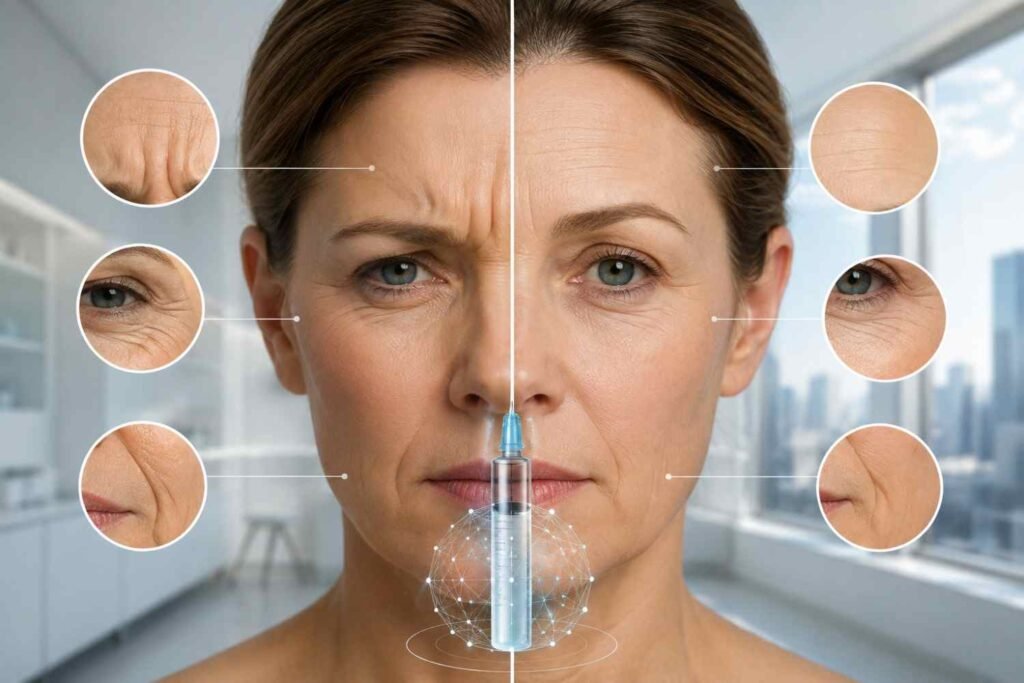
Dynamic wrinkles, sometimes called mimic lines, are created by movement. They show up when a person smiles, squints, frowns, or raises their brows. Botox is well suited for these lines because it temporarily relaxes the muscle activity that creates them.
Static wrinkles are different. These are the lines that remain visible even when the face is at rest. They often develop over time as repeated movement, skin thinning, and gravity combine. A personalized treatment plan has to account for both. Botox can soften the muscular component, but the consultation should also clarify whether the patient’s expectations align with what muscle relaxation can realistically deliver.
That distinction is essential. It prevents mismatched expectations and helps patients understand why two people with similar-looking lines may not receive the same plan.
What Barr Aesthetics Evaluates During the Consultation
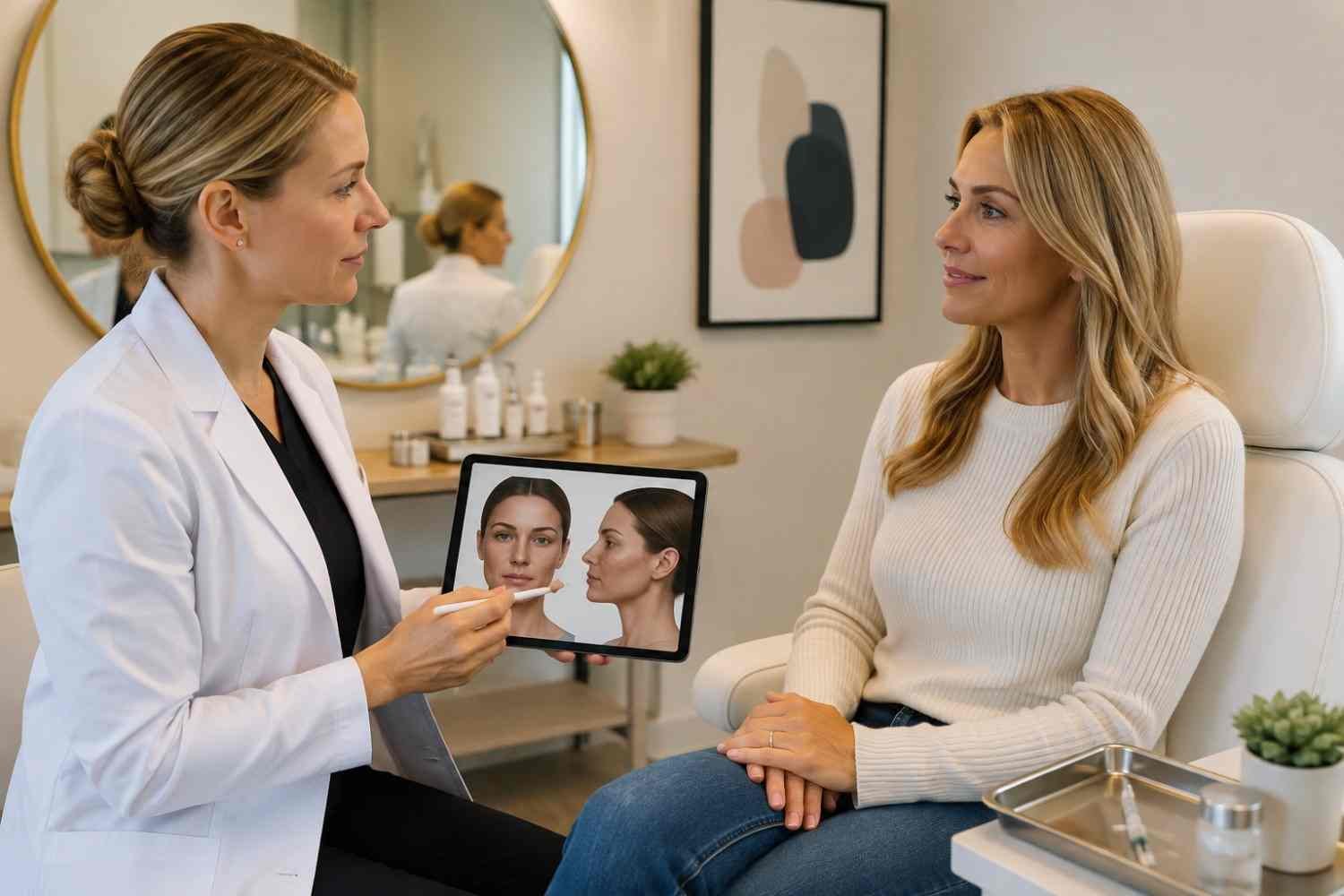
The consultation is where the treatment plan starts to take shape. At Barr Aesthetics, this is not a rushed check-in. It is a focused assessment of the face in motion and at rest, paired with a conversation about the patient’s goals.
The provider evaluates several factors together rather than in isolation. These usually include:
- The patient’s aesthetic goals and how subtle or noticeable they want the result to be
- Facial muscle strength and how strongly specific areas contract
- Age-related changes, including whether lines are mostly dynamic or also static
- Metabolism, which can influence how long results may last
- The most active treatment zones, such as the forehead, glabella, crow’s feet, or masseters
This kind of assessment is especially important because the same dose does not produce the same effect in every person. A smaller, softer muscle may need less product. A stronger muscle may require a more strategic approach. Barr Aesthetics uses that information to decide both where to place the product and how much to use.
The Role of Facial Anatomy in Better Results
Facial anatomy is the backbone of a strong injectable plan. A board-certified facial plastic surgeon sees patterns that are easy to miss in a casual assessment. That perspective helps avoid common mistakes, such as over-treating one area to compensate for another or leaving a key muscle untreated because the wrinkles are showing somewhere else.
This is where Barr Aesthetics stands out. Dr. Lucy Barr’s facial expertise brings a higher level of anatomical precision to the planning process. That does not mean every patient receives the same treatment philosophy. It means each plan is built with a sharper understanding of how muscles interact across the face.
In practical terms, that often leads to more balanced results. The forehead, brows, and eye area work together. So do the lower face and neck in certain patients. A good plan respects those relationships instead of treating each wrinkle as an isolated problem.
How Dosing Is Customized for Each Area
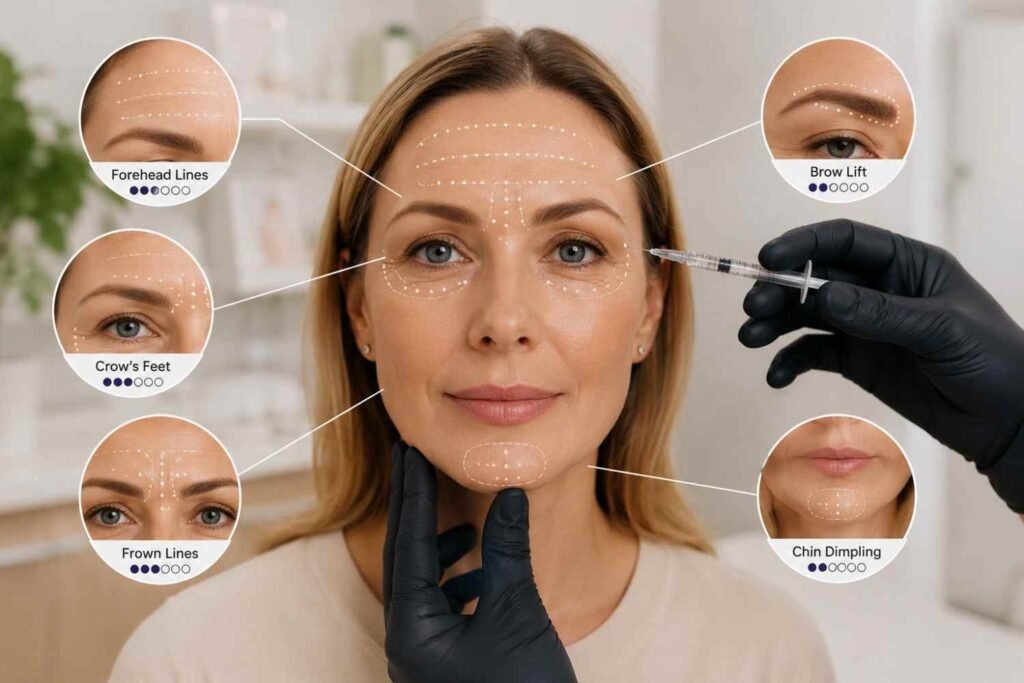
Botox dosing is not arbitrary. It varies by treatment area and by the patient. In practice, dosing may range from 2 units to 30 units per area depending on the zone, the strength of the muscle, and the intended outcome. That is why a personalized plan has to be specific.
A patient seeking softening of forehead movement may need a different approach than someone treating glabellar lines, also known as the “11s,” or someone trying to reduce masseter activity. A person concerned about bunny lines around the nose will not need the same placement strategy as someone focused on crow’s feet or neck bands.
The real value of customization is not simply getting “more” or “less” Botox. It is getting the right units in the right places to create a result that matches the face, not an abstract ideal.
Why Timing and Expectations Matter
Patients sometimes expect Botox to work immediately, but that is not how it behaves. Results usually become noticeable within 3 to 10 days, and the effect typically lasts about 3 to 6 months. That timing matters because a strong treatment plan includes patient education.
A well-informed patient knows what to expect after the appointment, how long to wait before judging the outcome, and when to return for maintenance. That is especially important for first-time patients, who may otherwise think a subtle result means the treatment failed when the product simply has not fully settled in yet.
Barr Aesthetics helps anchor those expectations early. That educational approach reduces confusion and supports better long-term satisfaction. It also encourages patients to consider the products and habits they use between appointments, including ways to detox your daily personal care routine and maintain a thoughtful overall approach to skin care.
What a Well-Planned Appointment Actually Looks Like
A personalized Botox appointment is efficient, but it should never feel careless. Most appointments take up to 30 minutes, require no anesthesia, and involve no required downtime. That convenience is part of Botox’s appeal, but it should not be mistaken for simplicity.
A strong appointment usually follows a clear sequence. The patient discusses goals. The provider examines movement patterns. The injection map is selected. Units are determined by area and anatomy. Then the treatment is delivered with precision.
The process may look quick from the outside, but the decisions behind it are layered. The provider is not just placing product into wrinkles. They are deciding how to soften expression while preserving natural motion. That balance is where the quality shows up.
The best results often feel invisible in the right way. Friends may notice that someone looks refreshed, but they should not be able to point to an obvious intervention. That is usually the mark of a well-designed plan rather than a heavily dosed one.
Why Personalization Is a Strategic Advantage, Not a Luxury

Personalized Botox is sometimes described as an elevated experience, but that undersells its practical value. In reality, customization improves decision-making. It aligns treatment with anatomy, reduces unnecessary product use, and gives patients a clearer roadmap for maintenance over time.
It also creates better continuity. When a patient returns for follow-up care, the provider can compare how the previous plan performed, whether certain areas need more or less support, and how the face responded over the full 3- to 6-month cycle. That feedback loop is central to long-term aesthetic care.
For Barr Aesthetics, personalization is not just branding. It reflects a clinical approach built around facial expertise, patient education, and careful observation. That is especially important in a city like Salt Lake City, where patients often want results that are polished but still believable. The best injectable plan should look like restraint, not obvious intervention.
Ultimately, a personalized Botox treatment plan is created by combining anatomy, goals, and judgment into one clear strategy. The consultation defines the problem, the dose matches the muscle, and the follow-up reinforces the result. When that process is done well, the outcome is more natural, more durable, and more satisfying. Barr Aesthetics builds its approach around that standard, and that is exactly why the planning phase deserves as much attention as the injection itself.