
I’ll be the first to admit it—nothing slows you down quite like a hamstring injury. It’s frustrating, especially when you’ve been active and feeling strong. I’ve been there: in the middle of a game or workout, and then—bam—my hamstring pulls.
It’s a sharp, sudden pain that forces you to stop what you’re doing. But here’s the silver lining: with the right exercises for hamstring injury, you can get back to your active lifestyle faster and stronger than before.
After my own hamstring injury, I discovered the importance of recovery and how the right exercises can make a huge difference. You’ll find that in the first few days, you focus on gentle, pain-free movements. As you heal, you move toward more advanced strengthening exercises to rebuild strength and prevent future injuries.
In this post, I’ll guide you through a practical, step-by-step recovery tips based on my own experience, complete with exercises that helped me—and that will help you—get back on track.
Why Should You Focus on Exercises for Hamstring Injury?
In the early days after a hamstring injury, it’s tempting to just rest and hope for the best. However, simply resting isn’t enough. You need to incorporate specific exercises for hamstring injury that focus on gentle stretching, muscle activation, and later strengthening.
This helps to speed up healing, maintain flexibility, and prevent the muscle from becoming stiff or weak, which could lead to further injury.
The goal with recovery exercises is to progress gradually, from very gentle movements in the early days to more dynamic exercises as you regain strength, health and wellness. Let’s break down the recovery process into easy-to-follow stages.
Early Stage Exercises: Gentle Movements to Activate the Hamstrings
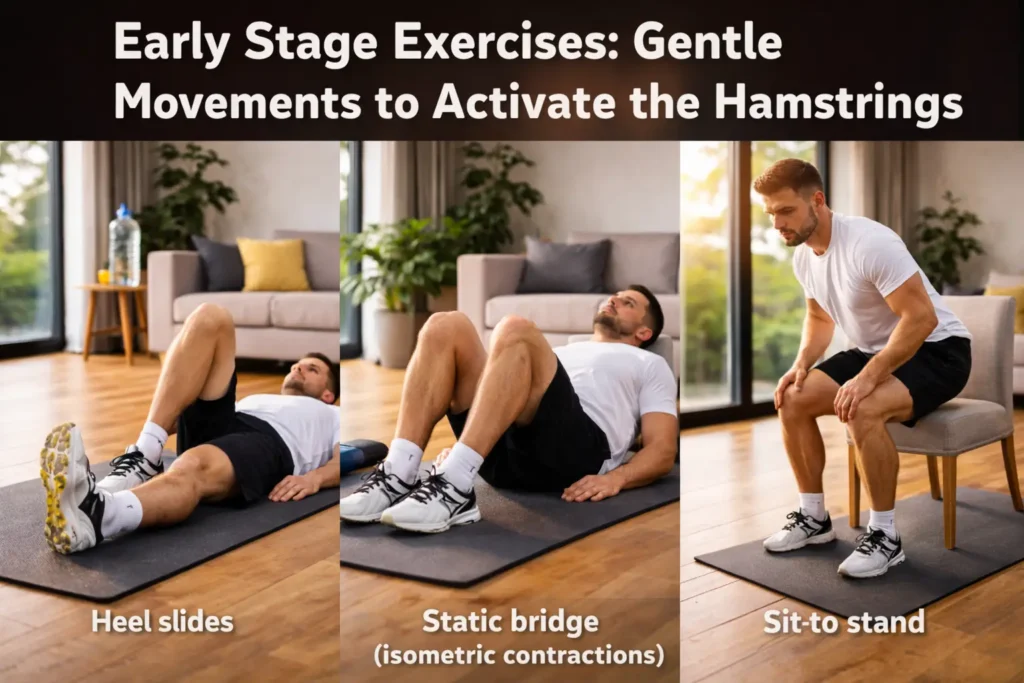
In the first few days after a hamstring injury, the focus is on gentle, pain-free movements. You don’t want to overdo it, but you do want to keep the muscles active and prevent stiffness.
1. Heel Slides: Reconnect with Your Muscles
I found heel slides to be incredibly effective in the initial phase. This exercise program is gentle on your hamstring and allows you to begin moving the muscles without any intense strain.
- How to do it: Lie flat on your back with your legs extended. Slowly slide your heel toward your hip by bending your knee, then slowly straighten your leg back out.
- Tip: Keep the movement slow and controlled, ensuring you don’t experience pain greater than a 4/10. If it hurts more than that, stop and modify the movement.
2. Static Bridge (Isometric Contractions): Activate Without Movement
This is a simple yet powerful exercise to engage your glutes and hamstrings while keeping the movements minimal.
- How to do it: Lie on your back with knees bent and feet flat on the floor. Press your heels into the floor to activate the glutes and hamstrings, attempting to lift your hips slightly, but without fully lifting off the floor. Hold the contraction for 5-10 seconds.
- Tip: Focus on squeezing the hamstrings and glutes to create that muscle activation. Don’t push through any pain.
3. Sit to Stand: Build Basic Strength
This exercise is great for rebuilding basic muscle strength and control.
- How to do it: Sit in a stable chair with your feet flat on the ground. Push up to a standing position slowly, then lower yourself back down with control. Focus on using your hamstrings and glutes to power the movement.
- Tip: Go slow and focus on controlled movement. This isn’t about speed; it’s about gradually activating your muscles.
Mid to Late Stage Exercises: Building Strength and Stability
Once the initial pain subsides, it’s time to move on to more dynamic exercises that build strength and restore function to your hamstring. These exercises will gradually increase in difficulty as your strength improves.
1. Glute Bridges: Focus on Hip Extension
Glute bridges were a game-changer for me in this phase. This exercise targets your hamstrings and glutes and improves your ability to control your hips.
- How to do it: Lie on your back with your knees bent and feet flat on the floor. Push through your heels to lift your hips, forming a straight line from your shoulders to your knees. Slowly lower back down.
- Tip: Start with both legs and progress to single-leg bridges as you feel more comfortable and strong.
2. Hamstring Curls: Progress to Resistance
In this stage, it’s important to add some resistance to challenge your hamstring more. You can start with just gravity or add ankle weights as you progress.
- How to do it: Lie face down with your legs extended. Slowly curl your heels toward your glutes and then return to the starting position.
- Tip: Begin with just body weight and progress to ankle weights or a resistance band for more intensity.
3. Single-Leg Balance: Improve Stability
Balance exercises are crucial for developing proprioception (awareness of body position), which helps prevent future injuries.
- How to do it: Stand on one leg for 30-60 seconds. Switch to the other leg. Make sure to engage your core for balance.
- Tip: Try this exercise on an unstable surface (like a pillow or balance pad) for added difficulty.
Advanced Exercises: Strength and Flexibility Combined
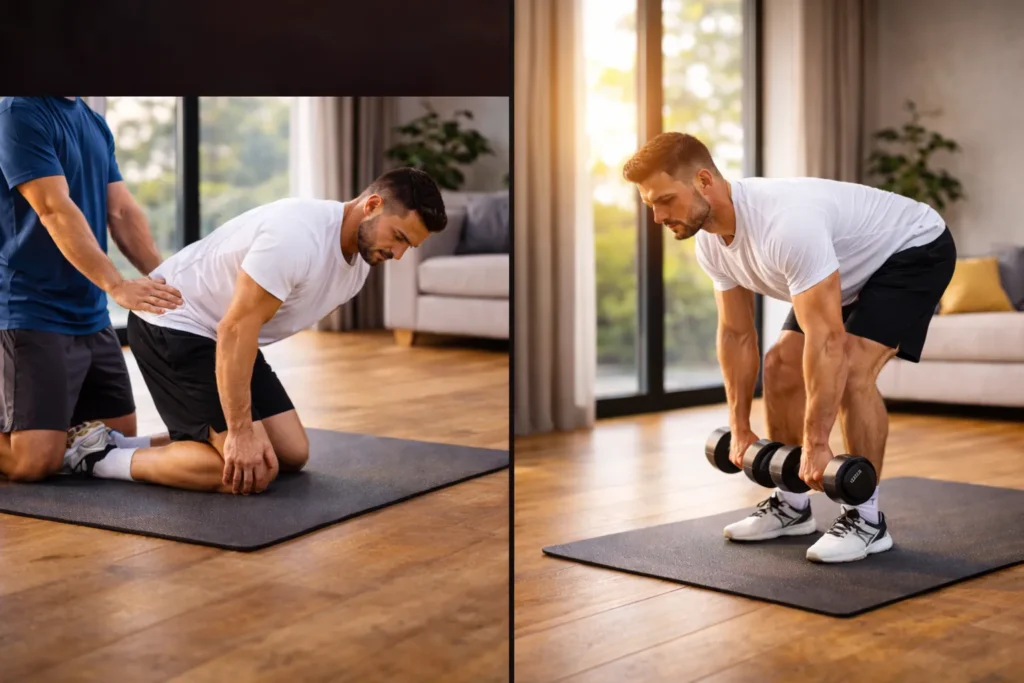
Once you’re nearing full recovery, it’s time to push your hamstrings with more advanced exercises. These exercises will help build the strength necessary for high-intensity activities and sports.
1. Nordic Hamstring Exercise: The Ultimate Hamstring Strengthened
This advanced exercise is proven to reduce the risk of hamstring injuries, but it requires control and precision.
- How to do it: Kneel on the floor with a partner holding your ankles or with your feet anchored. Slowly lean forward, controlling the movement with your hamstrings, and return to the starting position.
- Tip: If this is too hard at first, work on eccentric contractions by lowering slowly and then using your hands to help push yourself back up.
2. Romanian Deadlifts (RDLs): Focus on Hip Extension
RDLs are fantastic for building strength and flexibility through the entire posterior chain.
- How to do it: Stand with a barbell or dumbbells in front of your body. Keeping a slight bend in your knees, hinge at the hips and lower the weight toward the ground, maintaining a flat back. Return to standing by pushing your hips forward.
- Tip: Focus on pushing your hips back rather than bending your knees. This ensures you’re targeting the hamstrings.
How to Incorporate These Exercises Into Your Routine
It’s essential to follow a structured routine to ensure you’re not overloading your hamstrings too soon. Here’s a simple guide for the first few weeks:
Week 1-2: Focus on gentle, pain-free movements like heel slides, static bridges, and sit-to-stand exercises. No resistance yet.
Week 3-4: Begin incorporating glute bridges, hamstring curls, and balance exercises. Gradually increase resistance and intensity.
Week 5-6: Incorporate the Nordic hamstring exercise and Romanian deadlifts as your hamstring strength increases. Continue with balance and flexibility exercises.
Frequently Asked Questions
1. How long should I wait before starting hamstring rehab exercises?
It’s important to start exercises only when the pain has reduced to a manageable level, typically around a 4/10. Consult a physiotherapist to get personalized advice.
2. Can I stretch my hamstrings during recovery?
Gentle stretching is fine once the acute phase has passed. Make sure it’s pain-free and never overstretch.
3. How can I prevent a hamstring injury from happening again?
Strengthening your hamstrings, warming up properly before activity, and maintaining good flexibility are essential to prevent future injuries.
4. When can I return to full activity after a hamstring injury?
Return to full activity only after your strength and flexibility have been fully restored, and after getting clearance from your doctor or physiotherapist.
Keep It Moving: Recovery Is the Key to a Stronger You
Injuries happen to all of us, but recovery is where the magic happens. With the right exercises for hamstring injury, you can speed up your recovery and come back stronger than ever. Take it one step at a time—don’t rush the process. And remember: patience and consistency are your best friends.
Good luck, and here’s to a quick recovery and even stronger hamstrings!