

Starting a cookie business can be incredibly exciting, whether you’re aiming to share your signature recipes with your community, sell at local markets, or even grow an online empire.
But before you start baking up a storm, there are several important steps to follow. From understanding legal requirements to establishing a strong brand, this guide will take you through everything you need to know to launch your very own cookie business successfully.
Why Starting a Cookie Business Is a Sweet Opportunity
If you’re like me, you’ve probably baked cookies for friends and family for years, and the idea of turning that hobby into a business just feels right. Cookies are loved by almost everyone, and there’s always room for a unique, delicious twist.
So why not start a cookie business? Whether you’re looking to sell your creations online, at farmers’ markets, or in local stores, the cookie market is always ripe for new ideas, flavors, and creative packaging.
The process of starting your own cookie business is not just about baking cookies; it’s about navigating regulations, setting up operations, and building a brand that resonates with your customers. By following the steps outlined here, you’ll have everything you need to get started and grow your cookie business.
How to Start a Cookie Business: A Step-by-Step Guide
1. Legal and Regulatory Setup
Before you start baking and selling your cookies, you’ll need to get your legal foundation in place. This ensures that your business operates within the law and helps protect your personal assets.
Research Cottage Food Laws
If you plan to bake cookies from home and sell them, you’ll likely be working under cottage food laws, which allow you to produce low-risk foods (like cookies) from your home kitchen. However, these laws vary by state, so it’s crucial to check your state’s specific rules, which often include limits on annual sales and where you can sell your goods (farmers’ markets, online, etc.).
Obtain Certifications
Most states require you to have a food handler’s certification, which usually involves completing a short course and paying a small fee (around $10–$20). This ensures you know how to handle food safely and maintain proper hygiene in your kitchen.
Register Your Business
You’ll also need to register your business with your local government. This may involve choosing a business structure (LLC, S-Corp, or Sole Proprietorship) and applying for an EIN (Employer Identification Number) for tax purposes.
2. Product Development: Perfect Your Cookie Recipes

Now that your legal framework is set, it’s time to focus on what matters most: your cookies! Product development is key, and your goal is to create a product that stands out from the crowd.
Perfect Your Recipes
Choose a signature cookie that will become your brand’s trademark. Whether it’s a classic chocolate chip, an oatmeal raisin, or something more unique (think salted caramel pretzel or lemon lavender), having a standout recipe will help you build a loyal customer base.
Start by testing your cookies with friends and family and tweaking the recipe as needed to achieve the perfect flavor and texture.
Costing and Pricing
It’s important to calculate how much it costs to make each batch of cookies, including ingredients, packaging, and labor (your time!). Factor in a reasonable profit margin to ensure your business is sustainable.
When pricing your cookies, make sure your price covers the cost of production while still being competitive.
Standardize Baking
Consistency is key. Use reliable tools such as a cookie scoop and high-quality baking sheets to ensure each batch looks and tastes the same. This will also help maintain professional quality, especially if you’re selling in bulk.
3. Branding and Marketing Your Cookie Business
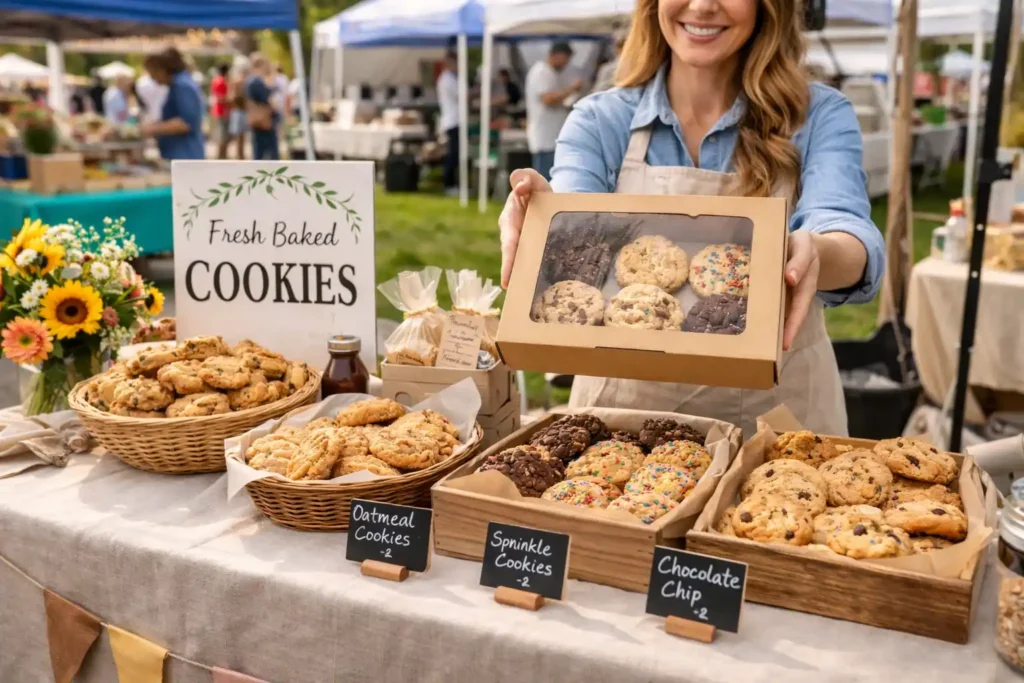
Once your product is ready, the next step is to build your brand and market it effectively.
Visual Appeal
The saying “you eat with your eyes first” holds true in the food business. Make sure to capture high-quality photos of your cookies in natural light for social media and your website.
Packaging is also crucial—invest in beautiful packaging like clear cellophane bags for individual cookies or kraft boxes with windows for bulk orders.
Build a Digital Presence
Social media is a powerful tool for small food businesses. Platforms like Instagram, Pinterest, and TikTok are great for sharing photos, videos, and recipes. Additionally, create a professional website where customers can learn about your story and order cookies online.
You can also set up a Google My Business profile to make sure locals can find you easily.
Packaging
Good packaging will not only keep your cookies fresh but also make them more attractive to customers. Include your business name, website, and any necessary allergen warnings on the packaging.
4. Sales Channels: How to Get Your Cookies Into the World
You have your cookies, brand, and marketing strategies in place—now it’s time to get your products out there and start selling.
Farmers’ Markets and Pop-Up Shops
Local farmers’ markets and craft fairs are fantastic places to sell your cookies. Keep in mind that popular markets may require you to apply months in advance, so plan accordingly.
Online Sales
If you prefer to sell your cookies online, platforms like Etsy, Shopify, and Squarespace are perfect for small food businesses. You can set up your own storefront, manage orders, and ship cookies directly to your customers.
Pre-Orders for Holidays
During peak seasons, like the holidays, consider offering pre-orders for cookie boxes or custom cookie sets. This helps you manage demand and ensures you don’t get overwhelmed.
5. Operations and Scaling Your Cookie Business
As your business grows, it’s important to scale gradually and manage operations efficiently.
Inventory Management
When your sales volume increases, it’s crucial to keep track of your inventory. Use a simple spreadsheet or invest in inventory management software to monitor your ingredients and packaging materials.
Sourcing Ingredients
Buying ingredients in bulk will help you save money. Stores like Costco, or wholesalers like WebstaurantStore, offer bulk prices for flour, sugar, and other baking essentials.
Staffing
If you plan to expand, you might need additional help. Hire part-time bakers or assistants to help with packaging and customer service. Be sure to train them in your business standards and ensure they are knowledgeable about food safety.
Frequently Asked Questions
1. How much does it cost to start a cookie business?
Starting a cookie business typically costs between $5,000 and $10,000. This includes costs for ingredients, packaging, marketing, and legal fees. As you scale, you may need to invest more in equipment and staffing.
2. Do I need a license to sell cookies from home?
Yes, depending on your state’s laws, you may need a cottage food license to sell homemade cookies. This allows you to sell low-risk foods from your kitchen. Check with your state’s health department to find out exactly what’s required.
3. Can I sell cookies online?
Absolutely! Platforms like Etsy, Shopify, and Amazon Handmade allow you to sell your cookies online. Be sure to comply with food safety regulations and shipping guidelines.
4. How do I price my cookies?
When pricing your cookies, make sure you cover the cost of ingredients, packaging, and your time. Add a reasonable profit margin to ensure your business is sustainable. Research what similar businesses charge to ensure your prices are competitive.
Sweeten Your Future with a Cookie Business
Starting a cookie business is a rewarding journey filled with creativity and entrepreneurial spirit. By focusing on perfecting your recipes, setting up a solid legal foundation, and using effective marketing strategies, you can turn your love for baking into a profitable business.
Whether you’re selling locally or online, the key is to offer a product that’s not only delicious but memorable. So go ahead, bake those cookies, and start your sweet new venture today!