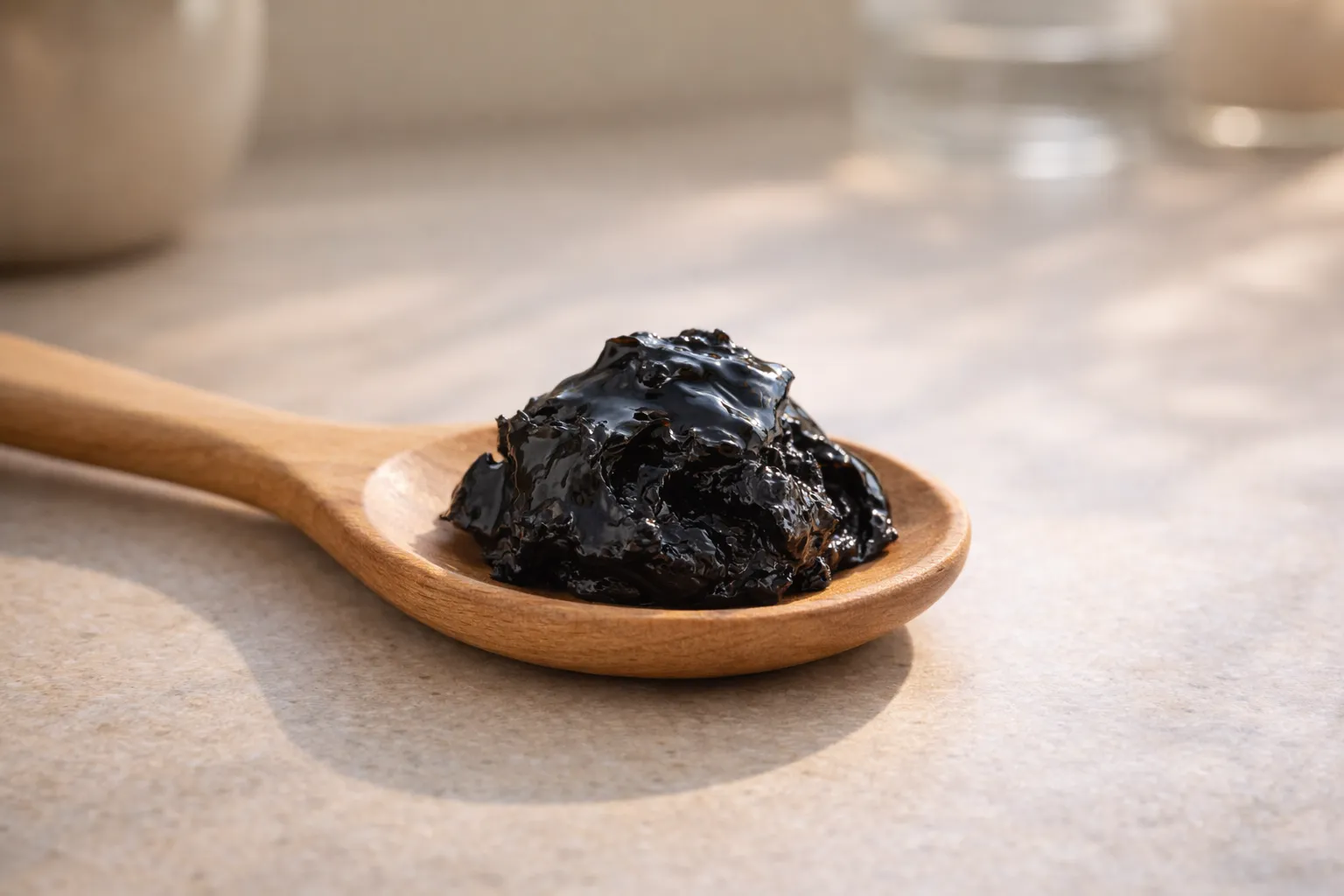
The first time I tried acorn jelly, I’ll be honest—I wasn’t impressed by the flavor. It was mild, slightly nutty, and honestly kind of plain. But then I learned why people eat it. That’s when acorn jelly a weight loss food, stopped being just another Korean dish and became a smart, practical tool I started using intentionally, especially on days when I wanted to eat more volume without overdoing calories.
This isn’t about starving or trendy detoxes. It’s about understanding how certain foods work with your body, not against it.
Why Is Acorn Jelly a Weight Loss Food in Korean Diet Culture?
Acorn jelly, or dotori-muk, works because it flips the calorie equation. You get a generous portion size with very little energy intake. One hundred grams comes in at roughly 40 to 47 calories, which means you can eat a full bowl and still stay within a calorie-conscious plan.
What really makes it effective is the texture. That jelly-like consistency slows eating and increases satiety. I notice I feel full faster, and I stay full longer, even though I haven’t eaten much in terms of calories.
Korean diet culture focuses heavily on balance and volume eating. Acorn jelly fits that mindset perfectly. It fills the plate and the stomach without overwhelming the body.
How Does Acorn Jelly Help You Feel Full on Fewer Calories?
Satiety matters more than calorie math alone. Acorn jelly contains a high amount of water and fiber-rich starch, which expands in the stomach. That physical fullness sends signals to the brain that say, “We’re good here.”
I like using it at lunch or dinner when hunger usually pushes me toward overeating. When acorn jelly sits next to vegetables or lean protein, the entire meal feels more substantial without feeling heavy.
Another underrated benefit is how slowly it digests. That gradual breakdown helps prevent sudden hunger spikes an hour later, which often lead to unnecessary snacking.
Can Acorn Jelly Support Fat Metabolism and Detox Naturally?
Acorns contain compounds like aconic acid, which support the body’s natural detox pathways. This doesn’t mean acorn jelly magically burns fat. It means it supports systems that help the body process waste more efficiently.
Potassium plays a role here too. It helps flush excess salt and water retention, which can make weight loss feel stalled even when habits stay consistent.
Some research suggests acorn-based foods may slow fat synthesis due to their complex carbohydrates. I treat this as a supportive benefit, not a guarantee. Real progress still comes from consistency.
What Does the Nutrition Profile of Acorn Jelly Look Like?
Acorn jelly keeps things simple nutritionally. It doesn’t pretend to be a super-protein or vitamin powerhouse.
Here’s a realistic snapshot per 100 grams:
| Nutrient | Amount |
| Calories | 40–47 kcal |
| Carbohydrates | 9.5–10 g |
| Protein | ~0.5 g |
| Fat | 0–0.2 g |
| Fiber | High |
This profile explains why it works best as part of a balanced plate. I never eat it alone expecting miracles.
How Do Koreans Eat Acorn Jelly for Weight Loss?
Flavor matters if you want consistency. Acorn jelly rarely appears plain for a reason.
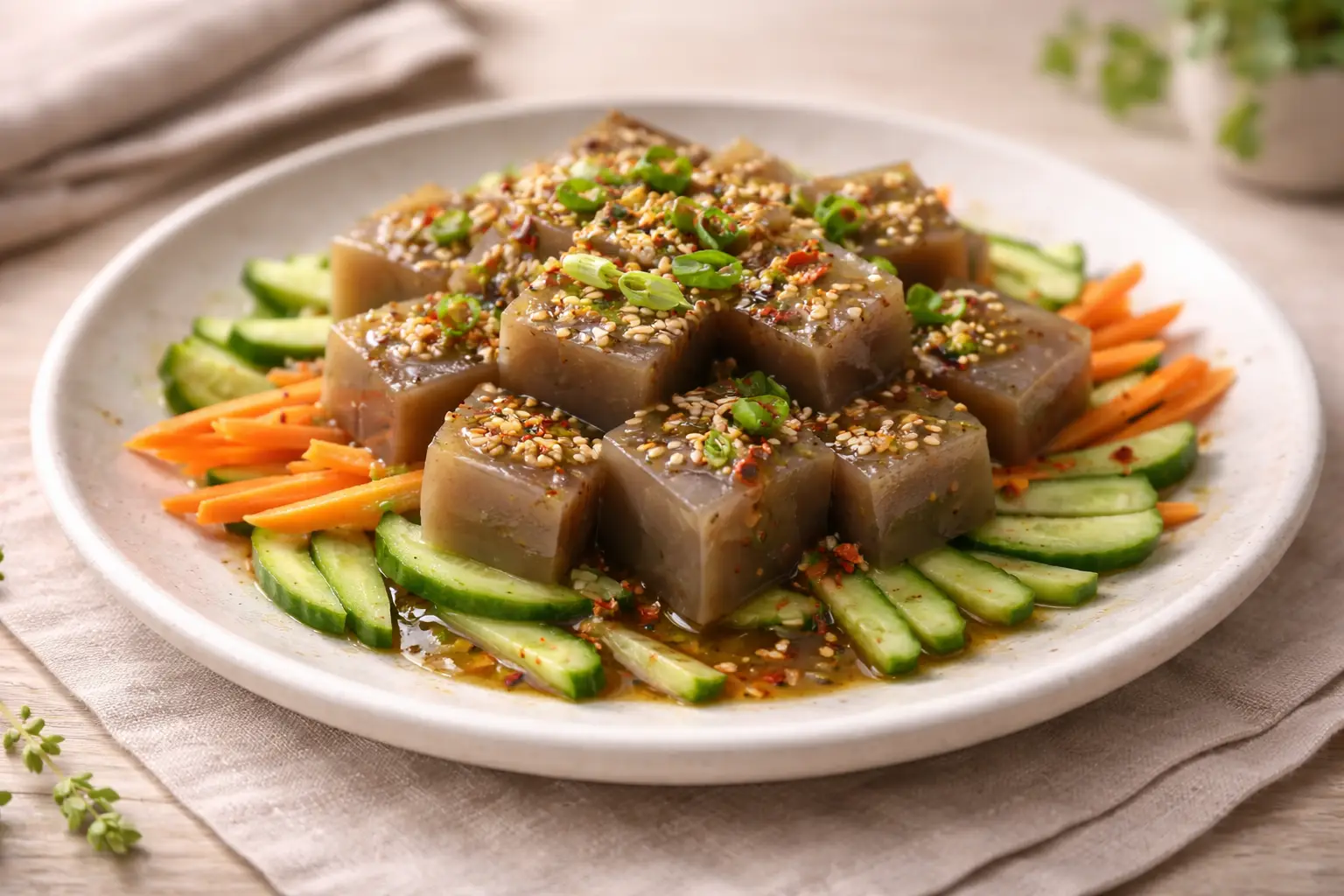
Dotorimuk-muchim turns it into a refreshing salad with vegetables and a light soy-based dressing. The crunch from cucumbers and carrots balances the soft texture beautifully.
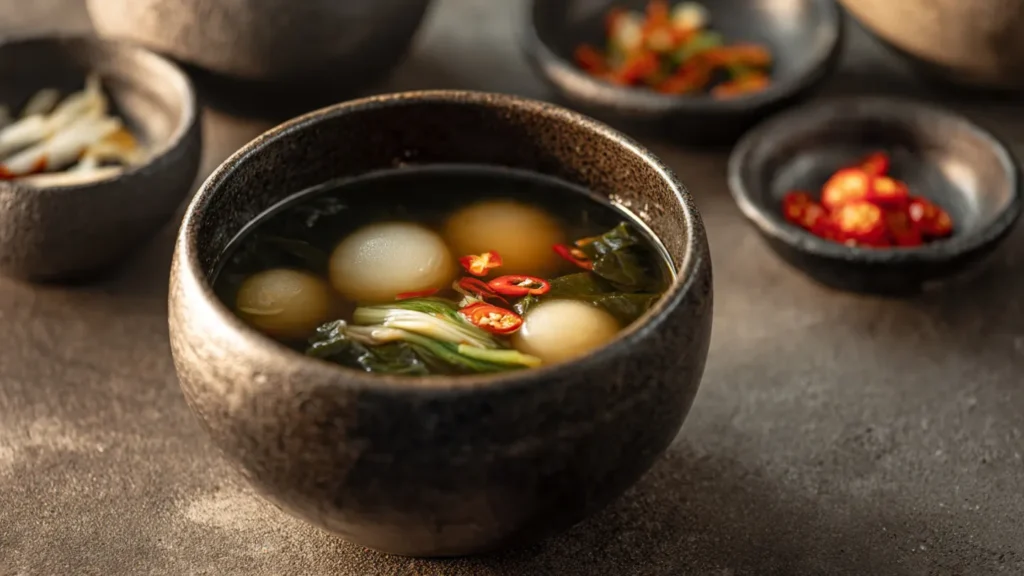
Dotorimuk-sabal serves it chilled in broth, often with kimchi. This version works well in hot weather or when one feels loss of appetite but nourishment still matters.
I prefer the salad style because it keeps things satisfying and colorful.
How I Use Acorn Jelly a Weight Loss Food in My Routine
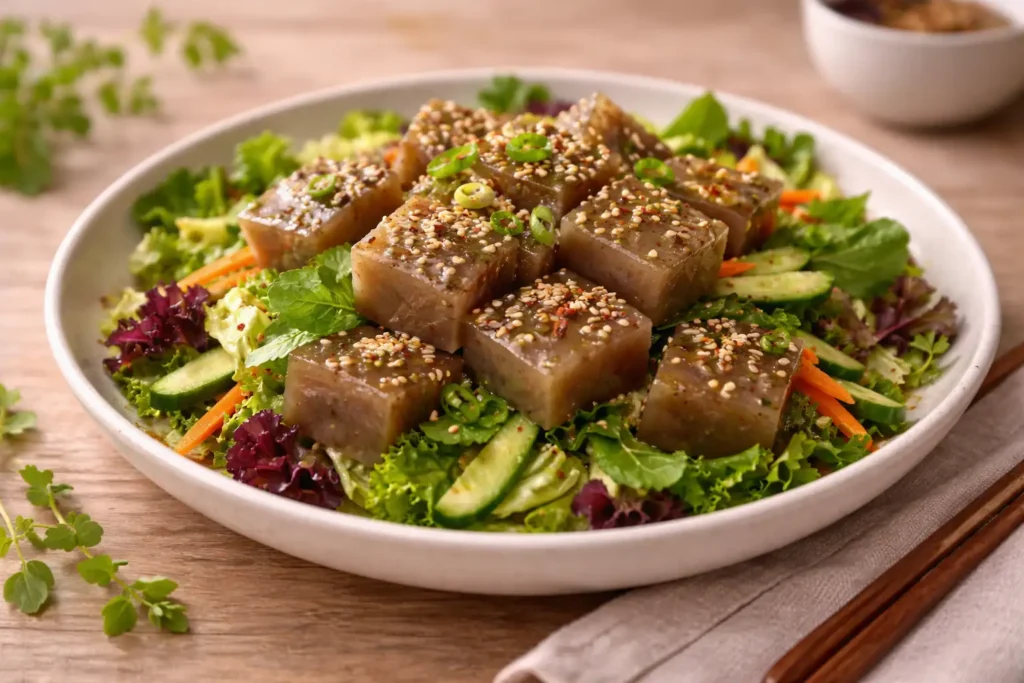
I treat acorn jelly like a base, not the main event.
First, I portion it generously. Because calories stay low, I don’t stress about volume.
Next, I add fiber-rich vegetables like lettuce, cucumber, or shredded carrots. Texture contrast keeps meals enjoyable.
Then I add protein. Tofu, grilled chicken, or eggs work well. This step matters because acorn jelly alone won’t sustain energy.
Finally, I season lightly. Soy sauce, vinegar, sesame oil, and chili flakes add flavor without sabotaging progress.
I eat it slowly and stop when satisfied, not stuffed.
What Are the Downsides You Should Know About?
Acorn jelly contains tannins. In moderation, they help digestion, but too much can worsen constipation. I balance intake with fluids and vegetables.
Another issue is nutrient imbalance. Relying too heavily on acorn jelly can crowd out protein and essential vitamins. I never treat it as a meal replacement.
It works best as a supportive food, not a diet foundation.
Frequently Asked Questions
1. Can I eat acorn jelly every day for weight loss?
I don’t recommend eating it daily long-term. It’s low in protein and micronutrients, so variety matters. I use it a few times a week to support calorie control while keeping meals balanced.
2. Does acorn jelly actually burn fat?
No food directly burns fat. Acorn jelly supports weight loss by increasing fullness and reducing calorie intake naturally. Fat loss still depends on overall habits.
3. Is acorn jelly good for digestion?
For many people, yes. The fiber supports digestive health, but too much can cause constipation. Start slow and drink enough water.
4. Can vegetarians use acorn jelly for dieting?
Absolutely. It pairs well with tofu, legumes, and vegetables, making it easy to build plant-based meals.
The Real Secret: Eat More, Not Less—Just Smarter
Acorn jelly a weight loss food, taught me something valuable. Sustainable weight loss doesn’t come from restriction. It comes from choosing foods that let you eat generously while staying mindful.
I don’t rely on acorn jelly every day. I use it when hunger feels loud and discipline feels quiet. It helps me stay consistent without feeling deprived.
If you try it, focus on balance. Let acorn jelly support your meals, not replace them. That’s where it truly shines.