
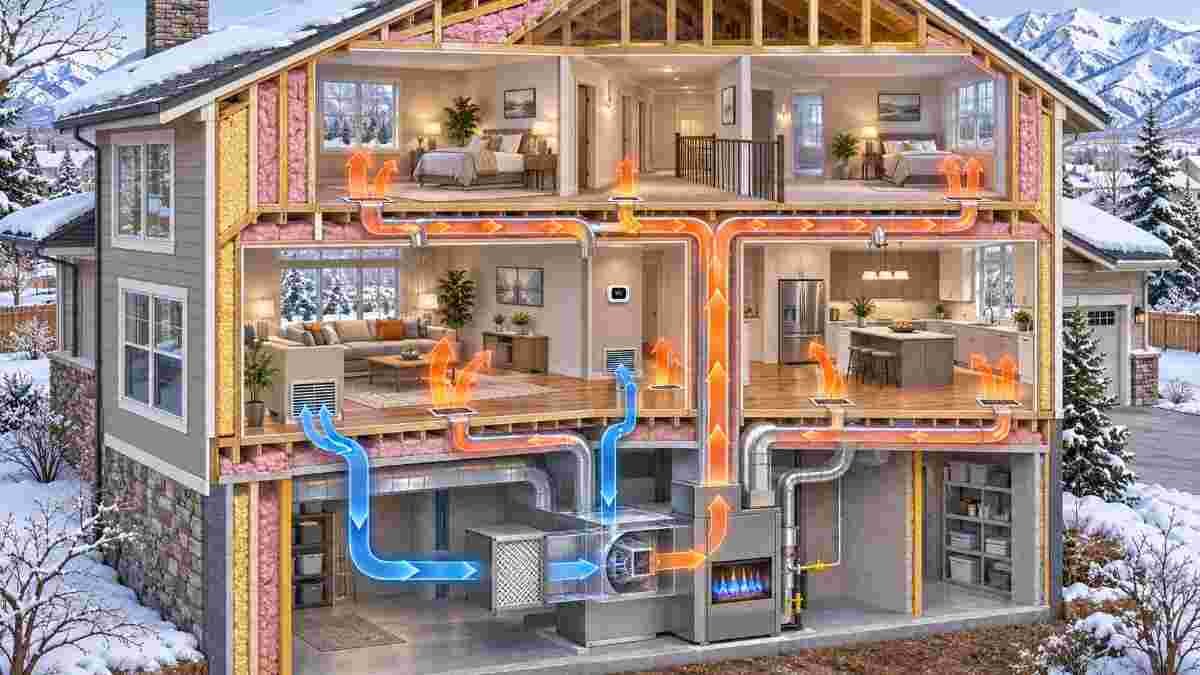
Turning up the thermostat does little when the heating system cannot deliver warm air. A cold house may have a furnace problem, restricted airflow, leaky ducts, or a control fault. Checking how the whole system behaves is more useful than assuming the thermostat needs replacement.
For homeowners looking for heating repair in Midvale, the bigger question is not whether the thermostat is set correctly. It is whether the furnace, ductwork, controls, or airflow are actually doing their job. Efficient Systems Heating and Cooling approaches the problem that way: start with the symptom, then trace it to the component or condition that is actually causing it.
Why A Correct Thermostat Setting Can Still Leave A House Cold
A thermostat is a control device, not the heat source itself. If the furnace is not producing enough heat, the thermostat can request warmth all day and still not change the indoor temperature. That is why the setting alone tells you very little about the health of the system.
There are also situations where the thermostat is technically working, but the rest of the setup is not. A home may have a weak airflow problem, a failing blower motor, a clogged filter, or a duct issue that prevents heated air from reaching the rooms that need it most. From the occupant’s perspective, the result is simple: the house feels cold. From a technician’s perspective, the cause may be very different.
The practical lesson is that comfort failures are often layered. A thermostat can be accurate and still be connected to a system that is underperforming. Efficient Systems Heating and Cooling sees this often during service calls, especially in older homes or in systems that have gone too long without a furnace tune-up.
The Most Common Mismatch: Demand Without Delivery
When a thermostat calls for heat, it should trigger a chain of events. If any part of that chain breaks, the house will not warm properly. The issue might be electrical, mechanical, or airflow-related.
Examples include:
- The furnace receives the signal but does not ignite properly.
- The blower runs, but air movement is weak.
- Warm air leaves the furnace, then leaks out through compromised ductwork.
- The thermostat is reading the room temperature incorrectly.
- A safety switch or limit device is preventing full operation.
Each of those problems requires a different repair strategy. That is why a good diagnosis matters more than guessing based on the thermostat display alone.
What Strong Diagnostics Reveal That A Quick Check Misses
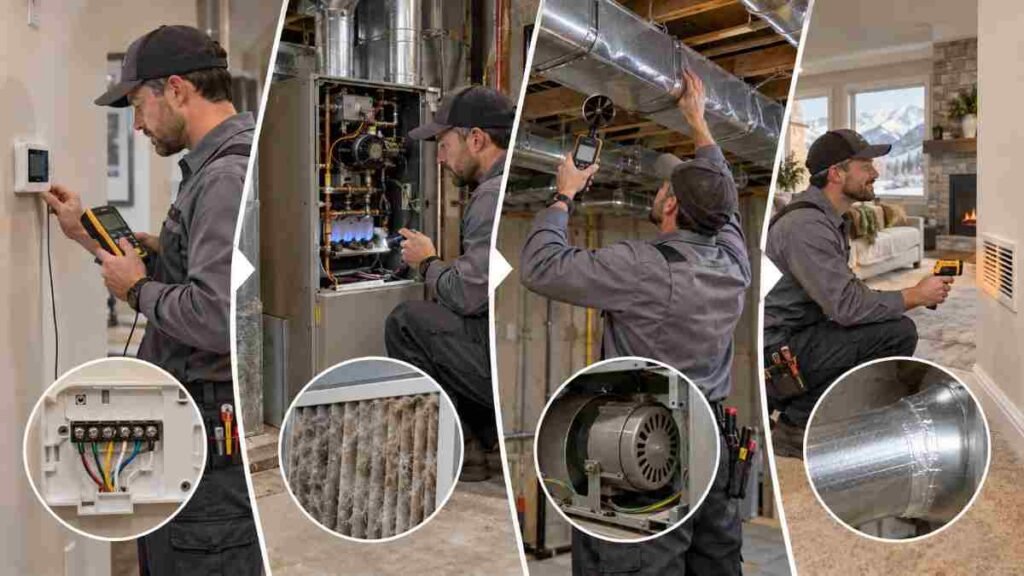
Professional heating diagnosis is less about finding a single broken part and more about reading the system as a whole. Efficient Systems Heating and Cooling uses that approach because a cold house can be caused by multiple overlapping issues, especially when mechanical and electronic wear and tear build up over time.
A superficial check might confirm that the thermostat has power or that the furnace is turned on. That is useful, but not enough. The more important questions are whether the system is responding correctly, whether heat is moving efficiently, and whether the home is actually holding onto that heat once it is produced.
A technician may look at the following:
- Thermostat calibration and communication
- Furnace startup sequence
- Ignition and burner performance
- Blower operation and airflow
- Duct leakage or disconnected duct sections
- Filter condition and restriction
- Signs of oversized systems that short cycle instead of heating evenly
That wider view helps separate the symptom from the source. It also prevents the common mistake of replacing a thermostat when the actual issue is deeper in the heating system.
Thermostat Problems Are Real, But They Are Not The Whole Story
A thermostat can fail, drift out of calibration, or be located where it gets misleading temperature readings. In those cases, replacement or thermostat maintenance and repair may solve the issue. But a thermostat problem is only one possibility among several.
For example, if a thermostat is placed near a heat source, in direct sunlight, or in a drafty spot, it may misread the home’s temperature and shut the furnace off too early. In another case, the thermostat may be fine, but poor airflow makes the far rooms feel cold. The right response is not to assume the thermostat is guilty. It is to verify whether the control signal matches the actual system behavior.
The Hidden Failures That Make A Home Feel Unheated
The coldest-feeling houses are not always the ones with no heat at all. Sometimes the furnace runs, but the heat is not reaching the living spaces effectively. That is why hidden failures matter so much during winter service calls.
A few of the most consequential issues are simple to overlook from inside the home:
- Duct leakage: Heated air escapes before it reaches the rooms that need it.
- Restricted airflow: Dirty filters or blocked returns reduce circulation.
- Failing components: Motors, igniters, controls, and sensors can weaken gradually.
- Short cycling: The system starts and stops too quickly to warm the home evenly.
- Oversized systems: Equipment that is too large may heat unevenly and shut off before distribution is complete.
These are not cosmetic issues. They affect comfort, efficiency, and reliability. They also explain why some homes still feel cold even when the thermostat seems to be demanding heat correctly.
Efficient Systems Heating and Cooling handles these problems by looking at the furnace, the ducts, and the controls together. That matters because a one-part fix may not solve a multi-layered issue.
What Homeowners Should Watch For Before The Problem Worsens
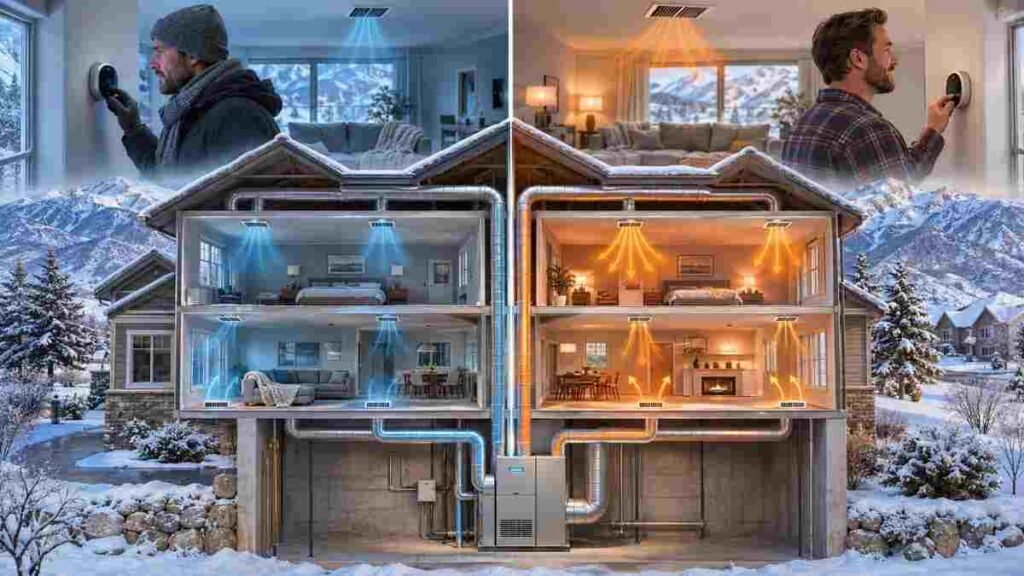
A cold house usually gives warning signs before a full breakdown. The challenge is recognizing those signs as system clues rather than treating them as random annoyances.
If you notice any of the following, the issue likely goes beyond thermostat settings:
- Some rooms are warm while others stay cold.
- The furnace runs frequently but the house never feels fully heated.
- The air from the vents feels weak or inconsistent.
- The system makes unusual startup noises or repeated clicking sounds.
- The furnace stops and starts in short bursts.
- The thermostat display seems normal, but the room temperature does not change.
These symptoms suggest that the home comfort problem is already beyond a basic adjustment. In that case, it is usually smarter to schedule a professional inspection than to keep changing settings and hoping for a different result.
For homeowners who want a more complete overview of service options, the HVAC system service in Midvale page provides a useful starting point.
When Repair Makes More Sense Than Replacement
Not every cold-house call ends with new equipment. In many cases, the right answer is a targeted repair, a part replacement, or a furnace tune-up. That may involve restoring proper ignition, repairing a control issue, replacing a worn component, or correcting airflow problems.
Replacement becomes the better option when the system is beyond practical repair, severely worn, or no longer able to deliver dependable comfort. A solid diagnostic process helps make that distinction honestly. That is an important part of how Efficient Systems Heating and Cooling serves homeowners: by matching the repair to the real condition of the equipment, not to a guess.
Why Fast, Local Service Matters In Utah Winters
When a home is cold in winter, time matters. A heating problem that lingers overnight can become much more than an inconvenience, especially during freezing weather. That is why local experience and emergency availability are not just marketing points. They affect how quickly the problem can be assessed and addressed.
Efficient Systems Heating and Cooling has served Utah communities for over eight years, including Midvale, Murray, Sandy, and Salt Lake City. That local experience matters because heating systems in Utah face real seasonal stress. Long stretches of cold weather put pressure on furnaces, thermostats, and duct systems alike.
It also helps to work with technicians who are licensed, trained, and prepared to handle a full range of problems. Some houses need simple maintenance. Others need component-level repairs. Some need a broader system correction. The right contractor should be able to tell the difference without pushing the most expensive option by default.
The Right Response Is Diagnosis, Not Guesswork
When a thermostat setting does not explain a cold house, the best next step is not more experimenting. It is a professional diagnosis that looks at the entire heating system. That is the only reliable way to tell whether the issue is the thermostat, a mechanical failure, duct leakage, airflow restriction, or aging equipment that can no longer perform consistently.
Efficient Systems Heating and Cooling is built for that kind of problem-solving. Their approach is practical, local, and grounded in the reality that heating systems fail in different ways. If your home still feels cold after the thermostat looks correct, the smarter move is to have the system checked before a small issue becomes a mid-winter emergency.