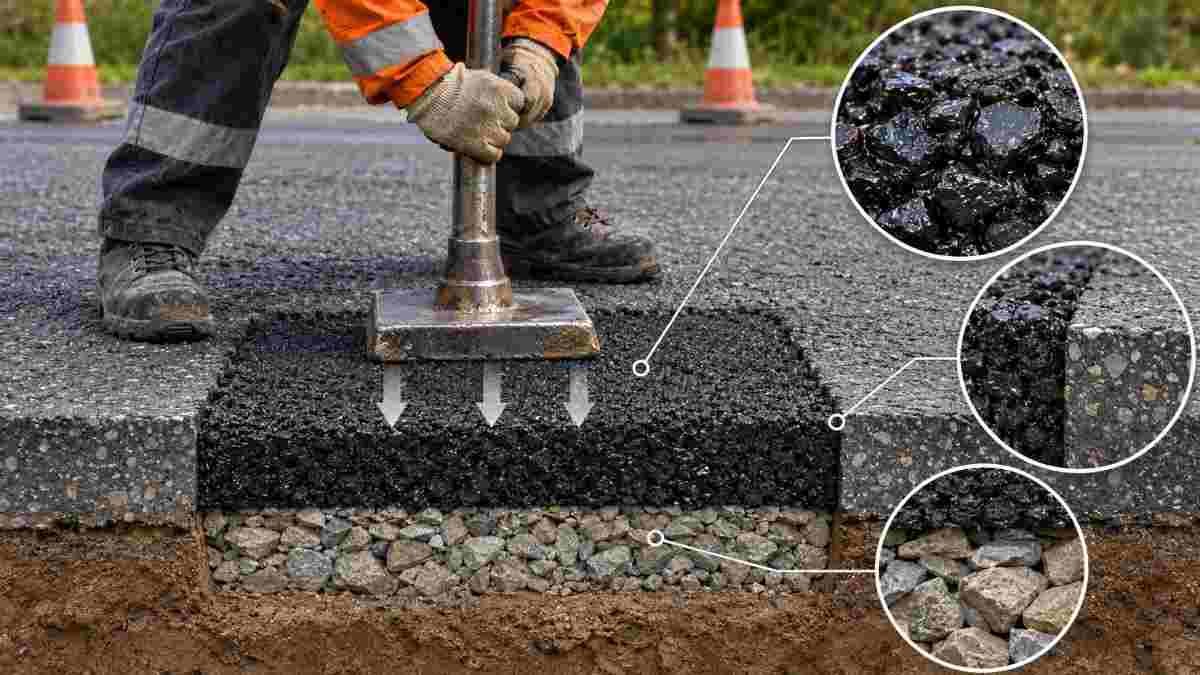
An asphalt patch may look fine when it is first placed, then loosen or settle after traffic and rain. The repair material is only part of the job. Preparing the damaged area and following the product’s placement and compaction instructions help determine how well the patch holds.
That is why experienced operators treat repair prep as the main event, not an afterthought. A clean cavity, sound edges, and a stable base matter more than whether the patch looks neat on day one. Granite sees this distinction clearly in the field: the difference between a repair that holds and one that breaks apart is often preparation, not product selection.
Why Small Repairs Fail Even When They Look Done Right
A small pothole can be misleading. It seems manageable, quick, and low risk, which encourages a rushed approach. But asphalt failures rarely start at the visible surface. They usually begin below it, where water intrusion, loose material, and weak edges create a pocket that refuses to stay stable.
The most common failure pattern is simple. Someone drops material into a hole, smooths the top, and moves on. The repair may look acceptable for a short time, but the underlying cavity still contains debris, unstable sidewalls, or moisture that weakens the bond. As traffic passes over it, the patch shifts, settles, or separates from the edge.
A second mistake is treating every repair like a cosmetic fill. Small repairs still need structural discipline. If the hole is not cleaned out and shaped correctly, the patch has nothing firm to lock onto. That is why even permanent cold mix asphalt performs best when the substrate is handled with care.
The Hidden Cost of Rushed Patching
Rushed patching is expensive because it creates repeat work. A second repair takes more labor, more cleanup, and more material than the original job would have required. In commercial settings, it can also mean more complaints, more exposure to damage, and more time spent reopening the same area.
For homeowners and contractors alike, the real cost is not the bag of material. It is the cycle of failure. A shallow, under-prepared patch can seem economical, but it often becomes the most expensive version of the repair because it invites a return trip.
Preparation Is the Real Repair
Good asphalt work starts with discipline around the opening itself. Before any material is placed, the repair area should be treated as a small construction site, not a scoop-and-fill project. The goal is to create a cavity that is clean, stable, and ready to accept the patch.
That usually means removing loose debris, clearing out weak fragments, and defining the area so the patch sits against firm edges. If the sides are ragged or crumbly, the patch has fewer points of support. If the bottom is packed with dust, water, or broken asphalt, the new material cannot settle properly.
This is where many small jobs go wrong. The operator focuses on speed and skips the unglamorous work. But the best repairs are rarely the fastest ones. They are the ones that make the material work within a properly prepared space.
What Strong Edge Prep Actually Does
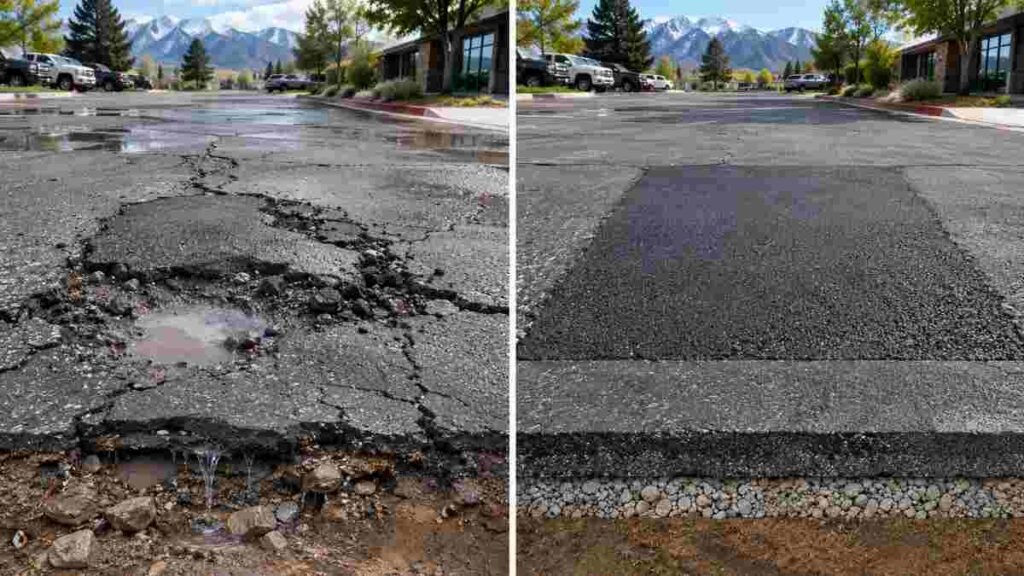
Edge preparation is not just about appearance. It gives the patch a defined perimeter and reduces the chance that the surrounding asphalt will continue breaking away. Clean, squared edges help the repair behave like a deliberate insertion rather than a loose fill.
That matters because weak edges are often the first place a repair fails. Once the perimeter starts breaking down, the patch loses support and the hole grows. A prepared edge helps interrupt that pattern and gives the material a better chance of staying intact under traffic.
Why Compaction Cannot Be an Afterthought
Compaction is what turns loose material into a functional repair. Without it, even a decent patch can remain unstable or settle unevenly. Proper tamping helps the repair seat into the cavity and match the surrounding surface more closely.
For very small repairs, this step is easy to underestimate. Operators assume the mix will settle on its own. That assumption usually shortens the life of the patch. Compaction matters because it helps remove air pockets, stabilize the fill, and reduce the chance of movement after installation.
Matching the Material to the Job Prevents Overcomplication
The right material should simplify the repair, not complicate it. For minor pothole patching, a manageable package size can make the job easier to execute cleanly and without waste. That is one reason the availability of EZ Street asphalt in Draper, Utah is useful for smaller repairs: it fits the scale of the work.
A 50lb bag is practical when the repair is limited and targeted. It is easier to move, easier to stage, and easier to use with less leftover material sitting around. Granite offers that kind of format because small jobs do not always need bulk quantity. Sometimes the real efficiency comes from using the right amount of product for the repair scope.
That said, smaller does not mean simpler in every sense. The operator still needs to remove loose material, prep the edges, and compact the patch correctly. A convenient bag size solves the supply problem, not the preparation problem.
One Bag Versus Bulk Supply
It helps to think about patching in two categories.
- One-bag use makes sense for isolated potholes, a few edge repairs, or maintenance work where the area is small and defined.
- Bulk asphalt supply is more appropriate when the work expands across multiple repair points or a larger pavement section needs consistent material availability.
Granite supports both approaches, which matters because some projects start as a single pothole and end up becoming a larger maintenance task. Planning for the true scope keeps the job from stalling halfway through.
Planning Better Preparation Before the First Shovel Hits the Ground
The best repair plan is the one that assumes failure is most likely to happen at the edges of the process, not in the material itself. That means thinking through the repair before opening the bag, not after.
A stronger prep plan should account for the condition of the opening, the surrounding surface, and the amount of material likely needed. It should also recognize whether the repair is isolated or whether there are multiple spots in the same area that should be addressed together. This kind of planning reduces wasted trips and avoids the common problem of running out of material in the middle of the work.
Granite’s role here is practical. It gives contractors and property owners access to commercial-grade materials without forcing them into an oversized purchase for a small task. That matters because good repair planning is partly about matching logistics to the job, not just selecting a product.
You can think about preparation in four questions:
- Is the cavity clear of loose debris?
- Are the edges stable enough to support a patch?
- Has the bottom been readied for material placement?
- Is the repair sized correctly for one bag or a broader supply plan?
If any of those answers is unclear, the repair is not ready yet. That pause is usually worth more than the time it takes to proceed too early.
The Operators Who Get Better Results Treat Preparation as a System
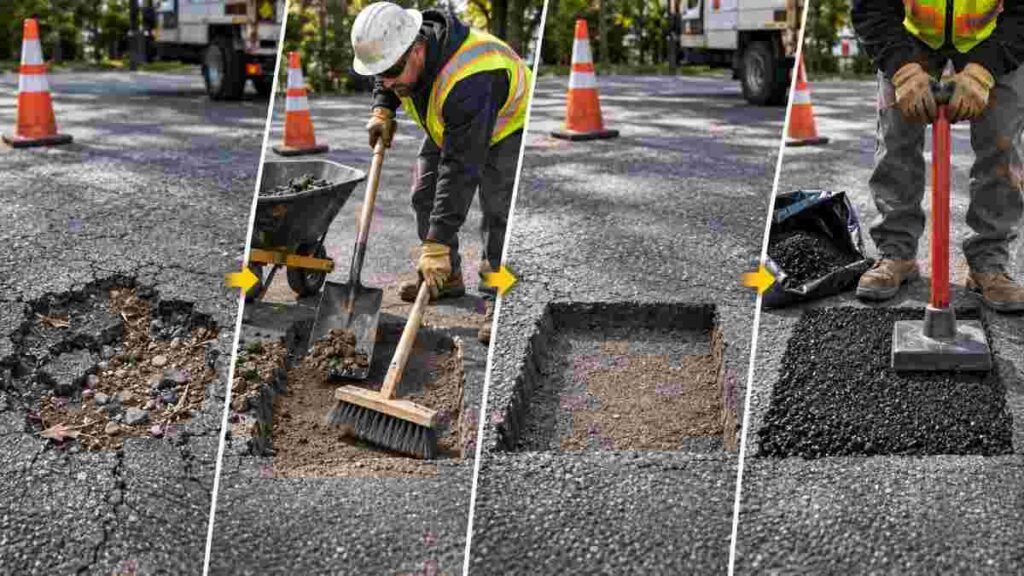
The most reliable asphalt repairs are not lucky. They come from a repeatable process. Strong operators do not rely on the patch to compensate for a weak cavity. They inspect the opening, remove compromised material, define the shape, place the mix, and compact it with intent.
That process sounds basic because it is. But basic is not the same as easy. The work demands discipline, especially on small jobs where people are tempted to skip steps because the repair looks minor. In reality, small repairs are often where bad habits show up fastest.
Granite supplies materials for both trade users and property owners. That combination matters. It means the customer is not forced to choose between a tiny retail solution and a supply chain built only for large crews.
Small asphalt repairs fail when they are treated as filler work. They succeed when they are treated as a compact version of a real pavement repair. Clean the area, stabilize the edges, compact properly, and size the material to the job. Do that consistently, and you stop buying the same patch twice.